By the VFP Consulting team
Every services organization has a version of this problem. A deal closes, the Statement of Work gets signed, and someone then has to make sure everything in the contract actually matches what’s set up in the systems of record: billing terms, payment schedules, discounts, project budgets. It’s detail-heavy, manual, and easy to get wrong, not because anyone is careless, but because the information lives in several different places at once.
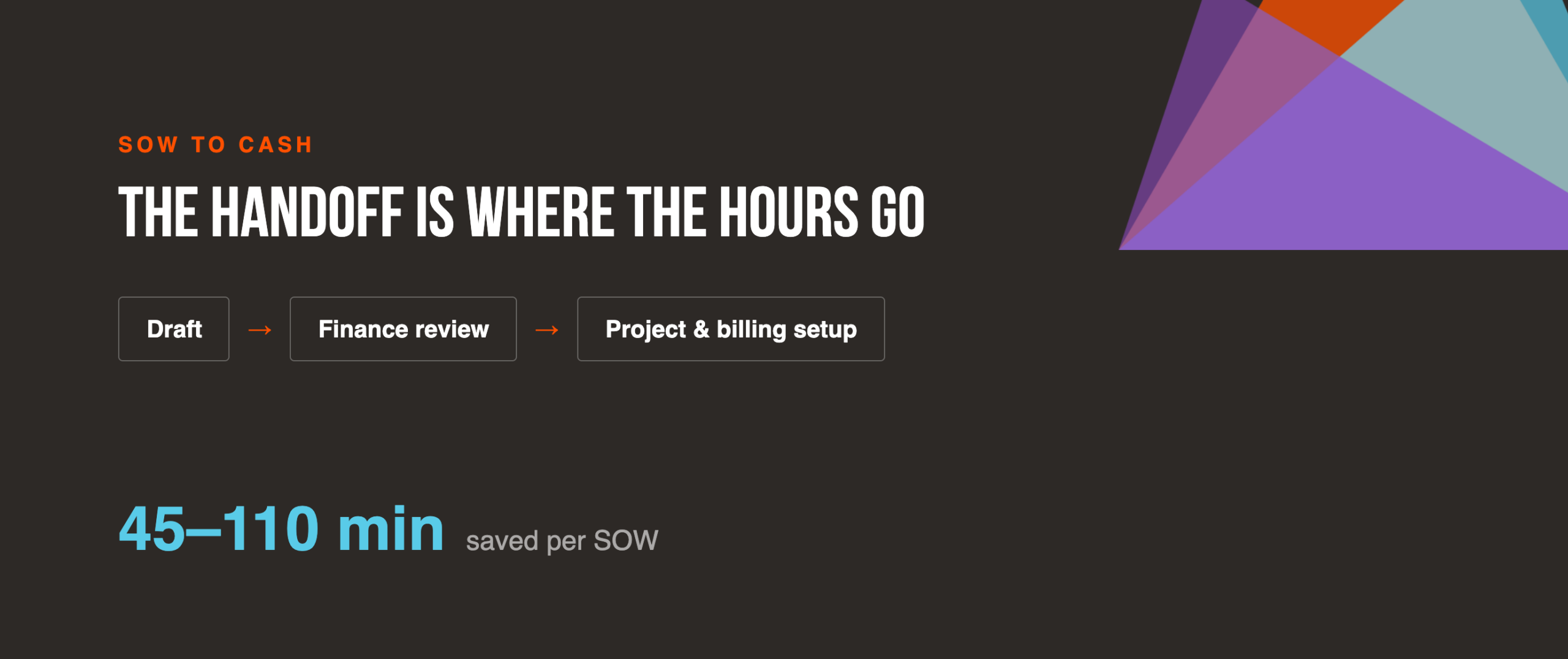
At VFP, we’re building an internal AI-powered workflow to close that gap. Today, once a deal closes, our finance team manually reviews the signed contract against the opportunity record and the project created in our PSA system, checking multiple documents against multiple systems to confirm that billing milestones are set up correctly, payment terms like net 30 are flagged properly, the project budget matches the total contract value, and discounts or special terms are carried through accurately. That review alone takes our team one to two hours per deal, and because it happens after the fact, any errors surface late, right when a client is expecting their first invoice.
Rather than automating the entire sales-to-cash process, we’re targeting this contract-to-system reconciliation step first. It’s a well-scoped place to start: a clear, repeatable task with a well-defined input (the signed contract) and a well-defined output (correctly configured project and billing data).
Here’s the workflow we’re building: once a deal moves past internal deal desk review, where terms, pricing, and discounts are finalized, we draft and send a Statement of Work to the client. Both our finance team and the client review the SOW before signature, catching any last changes to terms or pricing. Once it’s signed, an AI tool reads the contract and extracts the billing schedule, payment terms, and any discounts, then maps them to the correct fields on the project and account records in our PSA and CRM systems. Our finance team would still review the output, but instead of hunting across documents and systems, they’d verify a pre-populated match, aiming to cut review time from hours to a fraction of that.
Because we run multiple types of engagements- fixed price, advisory or health check, and time and materials- part of the build involves mapping each contract type differently into our systems, and tightening our own contract templates so the tool (and our people) can extract the right data consistently.
We’re still early in this build, but the potential is clear. This kind of automation removes manual, repetitive, error-prone work from a process that directly affects how quickly and accurately we invoice clients. If it works as expected, fewer mismatched terms and billing milestones should translate into a smoother, faster first-invoice experience and real time back for our team.
If your organization has a similar signed-but-not-synced gap between contracts and systems of record, we’d love to compare notes as we build this out.